Leadership is sacrifice, the choice to place the team before yourself. Leaders create clarity, set direction, and uphold standards to give their organization the freedom they need to perform. Often, the demand for leadership is greatest in times of uncertainty when the way forward is not easy to discern. Leaders will never be perfect, but it’s a responsibility that always deserves our full effort. Our decisions have consequences that reverberate far beyond ourselves. When adversity presents itself, we must ensure our team is ready.
There are four principles that are crucial to leading an exceptional team. They represent my personal experiences and observations of leaders that I admire. Importantly, these are choices, not conditions. No matter the situation, we are in control of how we lead. Everything is anchored in the first principle.
1. Be a great teammate.
This is the foundation of successful leadership and effective teams. Above all else, we must be great teammates to our superiors, peers, and especially our subordinates. Our purpose is to serve our team, to give them the necessary tools for success both personally and professionally. We are fellow human beings before we are authority figures. However, leaders must not confuse being a great teammate with being too friendly or avoiding unpopular but necessary decisions. Being a great teammate means doing what is necessary for the benefit of the team, not any one individual.
2. Lead when called.
Leadership is not synonymous with authority. It is not a title or job description, but rather a situation that calls for action. When those situations present themselves, when there is an absence of physical, mental, or moral leadership, it is our responsibility to step up and fill that void. This is true for all members of a successful team, no matter where they fall in the organization’s hierarchy. We each have a sense of right and wrong. When times are toughest, we must do the right thing. We must have the moral courage to answer the call to lead.
3. Prepare thoroughly.
We cannot expect success for ourselves or our team if we do not prepare for the challenges that lie ahead. We must commit the necessary time and resources to learn and grow. We must toughen the resolve of the body, mind, and spirit through shared adversity. This requires mentorship and discipline from those who have gone before to guide and sustain our efforts. Thorough preparation gives individuals and teams the trust and confidence required to succeed in our personal and professional lives, and ultimately in the face of adversity.
4. Take it to the limit.
This fourth and final principle captures the soul of leadership. In the face of extreme adversity, a great leader injects their team with the resolve and confidence to push on. This does not absolve us of our responsibility to remain flexible, change course, or abandon a lost cause. However, it does mean that when forward is the necessary course, we will drive on. It is our responsibility to know our team’s strengths, weaknesses, motivations, and fears so that we can go further together.
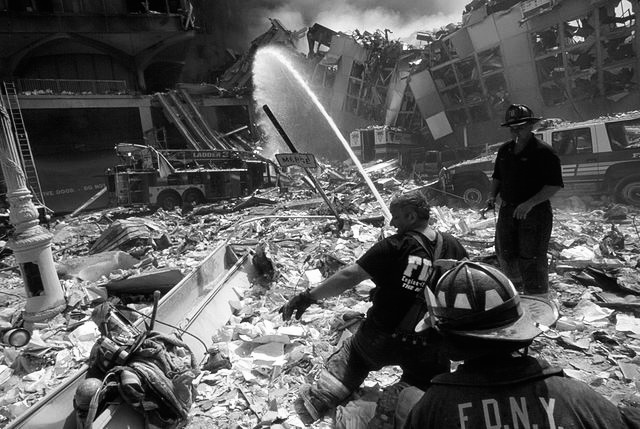
I am regularly inspired by Americans who embody these principles, but one example stands above the rest. Captain Jay Jonas, FDNY, described the moment from the ground-floor lobby of the North Tower on September 11, 2001: “I’m standing there. It was very loud and all of the sudden it got very quiet. One of the firemen from Rescue 1 looked up and said, ‘We may not live through today.’ We looked at him, and we looked at each other, and we said, ‘You’re right.’ We took the time to shake each other’s hands and wish each other good luck and ‘Hope I’ll see you later,’ which is especially poignant for me because we all had that acknowledgment that this might be our last day on earth, and we went to work anyway.”
In one of the most trying moments in our nation’s history, these firefighters reached out to their teammates, gave them hope, and reminded them that they were in this together. There was a trust among them that only training, experience, and shared adversity could provide. When the horrors of that morning began to unfold, they did not run. Ordinary men and women answered the call to step up and lead. They were willing to make the necessary sacrifices to accomplish the day’s mission when their community needed them most. We may never be called to that level of heroic leadership, but we can be ready by striving to live these principles: being a great teammate, stepping up even under the most difficult circumstances, sharpening ourselves through shared adversity, and giving what is necessary to a noble cause.
 Doug's Desk
Leave a comment