Unsung Heroes highlights service members who lost their lives in post-9/11 operations. With these conflicts fading from view it is easy for the remarkable service of these Americans to be overlooked. Their backgrounds and commitment to service are representative of the young men and women who continue to fill our military today.
Eric Kavanagh was raised in Severna Park, Maryland. According to local reporting, friends and family described him as a gentle soul who loved playing guitar and spent time helping neighbors with small chores. He had a large friend group and adored his younger brother and sister.
News reports said his ambitions for Army service became known in his early high school years. Even before enlisting, he began preparing his body for the rigors of basic training by running and working out.
According to Stars and Stripes, fellow Soldiers remembered him taking on many of the less glamorous tasks associated with Army life, even when it was not his job. One said, “Eric was the type of Soldier that, no matter what time the mission ended, he would be outside with his flashlight, checking the fluids on the vehicle.” Another recalled him “out in the cold motor pool, complaint-free, changing track pads.”
He had been in Iraq a little over a month at the time of his death.
Official DoD release from September 25, 2006:
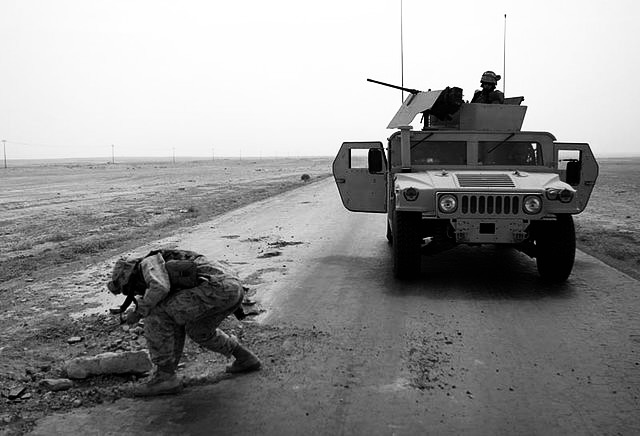
The Department of Defense announced today the death of a soldier who was supporting Operation Iraqi Freedom. Pvt. Eric M. Kavanagh, 20, of Glen Burnie, Md., died of injuries suffered in Baghdad, Iraq, on Sept. 20, when an improvised explosive device detonated near his HMMWV during combat operations. Kavanagh was assigned to the 1st Battalion, 26th Infantry Regiment, 2nd Brigade Combat Team, 1st Infantry Division, Schweinfurt, Germany.
Local reports quoted his father describing his son as a confident man and hero. His mother keeps a dog tag with his photo as a way of remembering him.
Eric Kavanagh is buried in Arlington National Cemetery. He is one of more than 2,500 service members under the age of 22 killed after 9/11, according to Military Times. His service reflects the character of the generation that answered the nation’s call after 9/11.
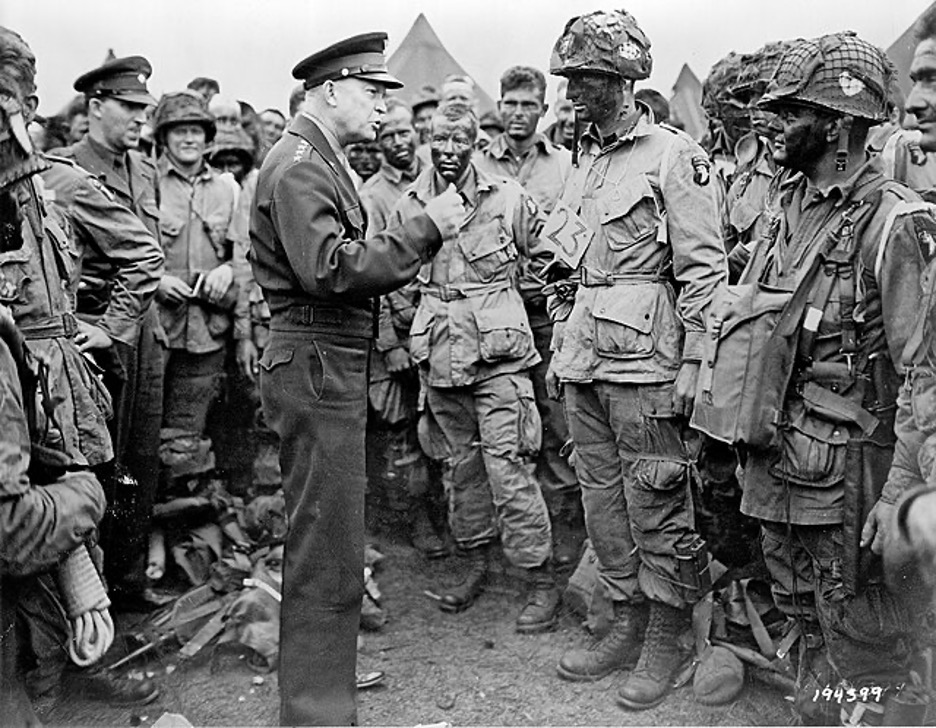
D-Day, June 6, 1944, was one of the defining moments of the twentieth century for the United States and the Western world. The fate of the European continent hung in the balance as the largest amphibious assault force in history landed over 150,000 troops on the fiercely defended beaches of northern France.
The success of Operation Overlord is well documented and often celebrated as a decisive American triumph. The books, movies, and “Back-to-Back World War Champs” T-shirts seen on the Fourth of July can lead some to believe the Allies’ success was inevitable, but that was far from the case.
Tidal requirements for landing craft and moon illumination for supporting airborne operations restricted the invasion to a narrow window, from June 5 to 7. Initially, the invasion was set to occur on June 5, but was postponed by one day due to deteriorating weather conditions. The hope was that a brief improvement forecast for June 6 would hold. If it did not, the operation would have to be pushed back by weeks, putting the mission’s secrecy at risk.
Earlier amphibious operations highlighted just how risky an assault on Germany’s Atlantic Wall could be. For instance, the 1942 assault on the port of Dieppe resulted in well over half of the 6,000-man force being killed, wounded, or captured. That failure framed the Allied understanding of what could go wrong at Normandy.
Weather, enemy action, or any number of unforeseen events could have easily prevented the Allied forces from securing a foothold in northern France, putting the entire war effort at risk. For the 2.8 million troops assembled in Britain, and for General Dwight Eisenhower, the commander of the invading force, success was anything but assured.
Eisenhower’s “In Case of Failure” Note
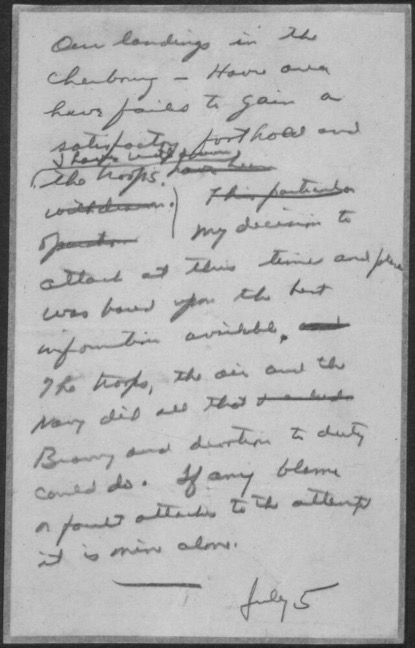
One of the most important preparations Eisenhower made before the invasion had nothing to do with mission success. He drafted a handwritten statement for public release, accepting full responsibility for the operation in the event of its failure:
Drafted on June 5, 1944 and mistakenly dated July 5, the note was discarded by Eisenhower after the landings succeeded but was recovered and preserved by an aide.
“Our landings in the Cherbourg-Havre area have failed to gain a satisfactory foothold and I have withdrawn the troops. My decision to attack at this time and place was based upon the best information available. The troops, the air, and the Navy did all that bravery and devotion to duty could do. If any blame or fault attaches to the attempt, it is mine alone.”
Eisenhower was ready to take personal responsibility for the outcome of the operation, even though he could not reasonably predict or directly control many of the factors influencing its result. He relied on the judgment of numerous advisors and staff, thousands of subordinate leaders, and millions of men and women to execute their share of the task, many in direct contact with a formidable enemy force.
A Commitment to Responsibility
Today, this commitment to owning the outcome is rare. We often see leaders shift the responsibility for failure to subordinates, unforeseen circumstances, or competitors whom they accuse of undermining their efforts. When responsibility is acknowledged, it is often reduced to a weak apology offered only after intense public scrutiny.
What many people do not understand is that shirking responsibility projects a fundamental weakness in their leadership. It signals that they have lost control or that another factor was able to derail their efforts. These leaders risk appearing easily defeated. Owning failure, when done honestly, reinforces authority rather than undermining it. People are surprisingly forgiving of failures and respond well to accountability, especially when the effort is genuine and the circumstances difficult.
Had the Germans won the day on June 6, we might be much more familiar with Eisenhower’s “In Case of Failure” note. He would have certainly faced serious professional consequences, but dodging responsibility for the outcome would have exposed him as lacking control over his organization. Instead, he made the choice to remain stoic and responsible even if the operation failed, preserving himself and inspiring those around him to do the same.
Deflecting blame may appear to be personally advantageous in the moment, but in the long run it hurts both the leader and the organization. It is important to expect accountability not only from ourselves but from those whom we elevate to leadership positions.
Leadership is sacrifice, the choice to place the team before yourself. Leaders create clarity, set direction, and uphold standards to give their organization the freedom they need to perform. Often, the demand for leadership is greatest in times of uncertainty when the way forward is not easy to discern. Leaders will never be perfect, but it’s a responsibility that always deserves our full effort. Our decisions have consequences that reverberate far beyond ourselves. When adversity presents itself, we must ensure our team is ready.
There are four principles that are crucial to leading an exceptional team. They represent my personal experiences and observations of leaders that I admire. Importantly, these are choices, not conditions. No matter the situation, we are in control of how we lead. Everything is anchored in the first principle.
1. Be a great teammate.
This is the foundation of successful leadership and effective teams. Above all else, we must be great teammates to our superiors, peers, and especially our subordinates. Our purpose is to serve our team, to give them the necessary tools for success both personally and professionally. We are fellow human beings before we are authority figures. However, leaders must not confuse being a great teammate with being too friendly or avoiding unpopular but necessary decisions. Being a great teammate means doing what is necessary for the benefit of the team, not any one individual.
2. Lead when called.
Leadership is not synonymous with authority. It is not a title or job description, but rather a situation that calls for action. When those situations present themselves, when there is an absence of physical, mental, or moral leadership, it is our responsibility to step up and fill that void. This is true for all members of a successful team, no matter where they fall in the organization’s hierarchy. We each have a sense of right and wrong. When times are toughest, we must do the right thing. We must have the moral courage to answer the call to lead.
3. Prepare thoroughly.
We cannot expect success for ourselves or our team if we do not prepare for the challenges that lie ahead. We must commit the necessary time and resources to learn and grow. We must toughen the resolve of the body, mind, and spirit through shared adversity. This requires mentorship and discipline from those who have gone before to guide and sustain our efforts. Thorough preparation gives individuals and teams the trust and confidence required to succeed in our personal and professional lives, and ultimately in the face of adversity.
4. Take it to the limit.
This fourth and final principle captures the soul of leadership. In the face of extreme adversity, a great leader injects their team with the resolve and confidence to push on. This does not absolve us of our responsibility to remain flexible, change course, or abandon a lost cause. However, it does mean that when forward is the necessary course, we will drive on. It is our responsibility to know our team’s strengths, weaknesses, motivations, and fears so that we can go further together.
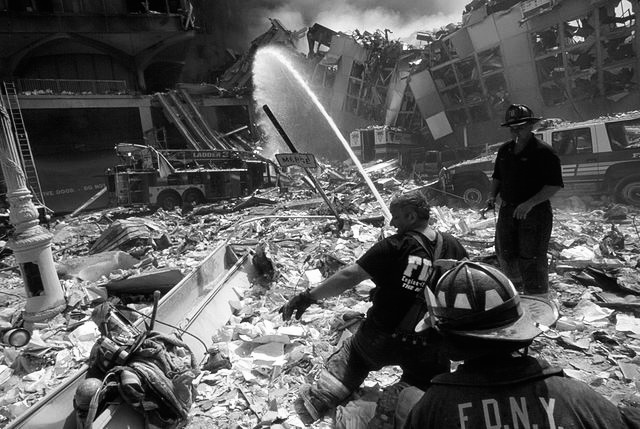
I am regularly inspired by Americans who embody these principles, but one example stands above the rest. Captain Jay Jonas, FDNY, described the moment from the ground-floor lobby of the North Tower on September 11, 2001: “I’m standing there. It was very loud and all of the sudden it got very quiet. One of the firemen from Rescue 1 looked up and said, ‘We may not live through today.’ We looked at him, and we looked at each other, and we said, ‘You’re right.’ We took the time to shake each other’s hands and wish each other good luck and ‘Hope I’ll see you later,’ which is especially poignant for me because we all had that acknowledgment that this might be our last day on earth, and we went to work anyway.”
In one of the most trying moments in our nation’s history, these firefighters reached out to their teammates, gave them hope, and reminded them that they were in this together. There was a trust among them that only training, experience, and shared adversity could provide. When the horrors of that morning began to unfold, they did not run. Ordinary men and women answered the call to step up and lead. They were willing to make the necessary sacrifices to accomplish the day’s mission when their community needed them most. We may never be called to that level of heroic leadership, but we can be ready by striving to live these principles: being a great teammate, stepping up even under the most difficult circumstances, sharpening ourselves through shared adversity, and giving what is necessary to a noble cause.
 Doug's Desk